Roadside assistance costs depend on which path you take. A membership or insurance add-on runs roughly $10 to $160 a year, billed whether you ever use it or not. The other path is calling a local San Diego provider directly for a single incident, where you pay a flat rate per service: a jump start, a flat tire change, a lockout, fuel delivery, or a winch-out, all quoted before anyone gets dispatched. No membership, no annual fee, and usually a faster arrival.
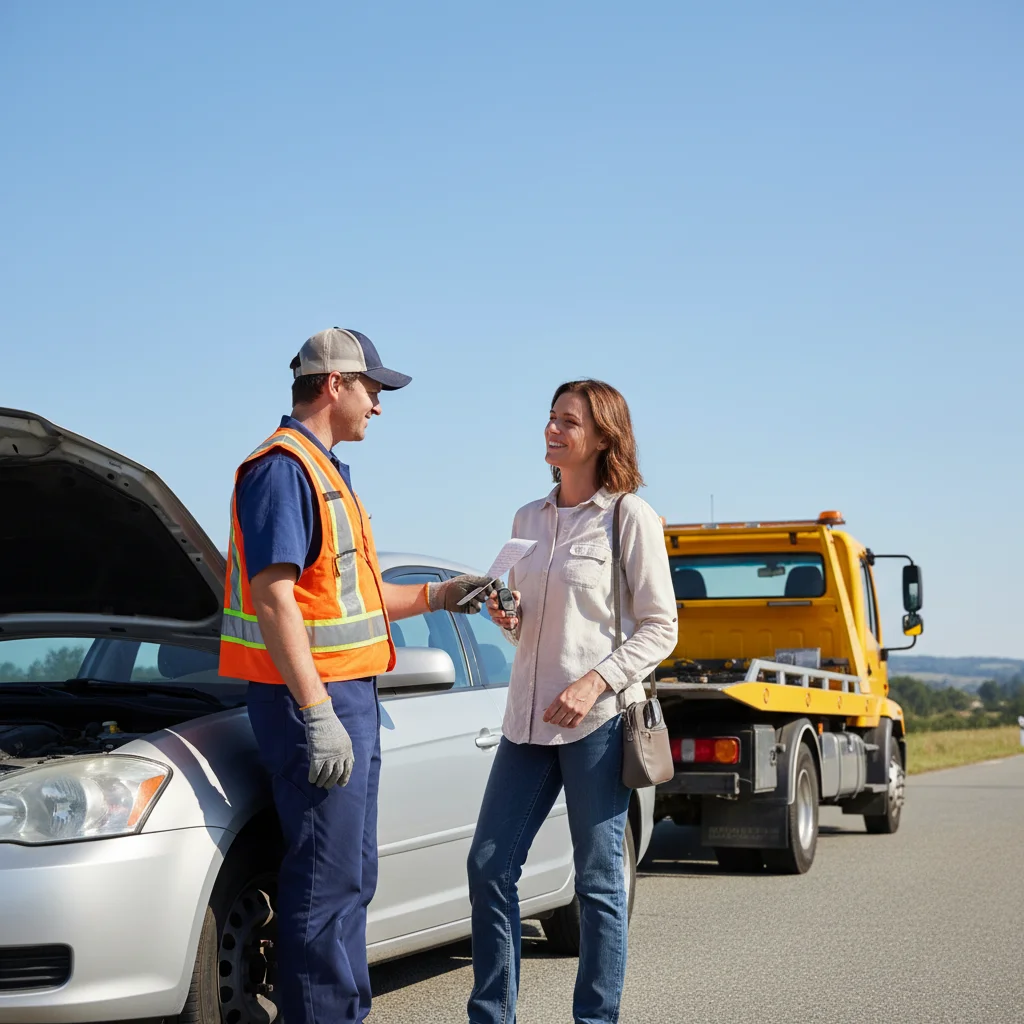
Most articles you’ll find on this topic only cover the first path. They compare AAA tiers and insurance add-ons, then stop. That’s fine if you plan ahead and break down a few times a year. But it leaves out the question most stranded drivers actually have at 9 PM on the shoulder of the 805: what does it cost to just call someone right now without joining anything? That’s what this guide covers, with real San Diego ranges.
The two ways to pay for roadside help
Think of roadside assistance as either a subscription or a single purchase.
A subscription means you pay an annual fee up front and the provider covers a set number of calls per year. AAA, your insurance add-on, and standalone clubs all work this way. You’re buying coverage in advance.
A single purchase means you call when something breaks, get a flat-rate quote, and pay for that one job. No membership, no waiting period, no claim on file. This is pay-per-use, and it’s how a local provider like us works.
Neither is wrong. Which one saves you money comes down to how often you break down and how fast you need help.
Membership and insurance plans: the annual costs
Here’s what the national plans charge, based on published 2026 pricing.
Insurance add-ons are the cheapest on paper. State Farm runs about $5 to $10 per vehicle per year. Progressive lands around $11 to $16. GEICO starts near $14. Allstate’s add-on is closer to $25. The catch is that using it can count as a claim, and some drivers worry about how that affects renewal rates.
Auto clubs like AAA cost around $50 a year for a basic membership, climbing to $160 for higher tiers that add more towing miles and trip benefits. Standalone plans from providers like Allstate run roughly $73 to $89 a year.
Credit card programs charge per call even when the card includes the benefit. Bank of America runs about $59.95 per call. Some Visa programs hit $79.95 per call. These are pay-per-use disguised as a perk.
So the honest annual range is about $10 to $160, depending on whether you go insurance add-on or full auto club.
Pay-per-use: what a single San Diego call costs
When you skip membership and call a local provider, you pay per service. National sources put on-demand roadside calls at $75 to $250 per incident, with towing adding $4 to $7 per mile on top of a hook-up fee. Those are national figures, but they track closely with what we see across San Diego County.
Here are typical San Diego pay-per-use ranges by service. These are general market ranges, not fixed Quick Tow prices. For your exact situation, call (858) 923-5787 and we’ll quote a flat rate before we dispatch.
Jump start
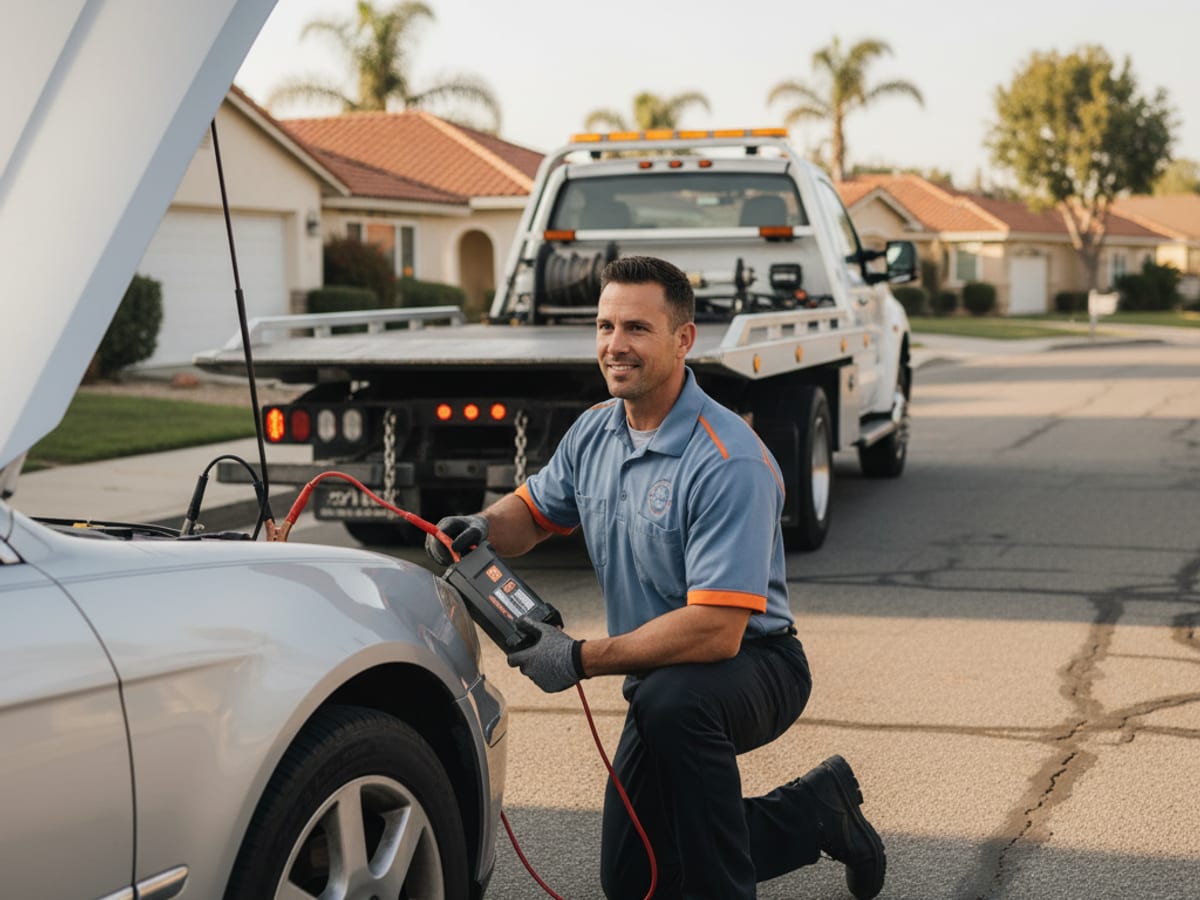
A dead battery is the most common call we get, and San Diego heat makes it worse. Heat shortens battery life and kills weak batteries faster than cold does, so summer in inland areas like El Cajon and Santee sees a spike. A typical pay-per-use jump start runs $50 to $100 in San Diego. See jump start service near me for what to expect on arrival.
Flat tire change
Swapping your flat for your spare on the roadside is labor, not a tow. Typical range is $50 to $100. If you have no usable spare, that turns into a tow to a tire shop, which is priced separately. We cover the flat-specific details in flat tire towing in San Diego.
Lockout service
Keys locked in the car, engine sometimes still running. A pop-and-go lockout typically runs $50 to $150 depending on the vehicle and how the locks are built.
Fuel delivery
Running dry on the 8 heading back from the desert happens more than people admit. Fuel delivery typically runs $50 to $75 plus the cost of the gas itself.
Winch-out
Stuck in sand at the beach, slid off a dirt shoulder, or dropped a wheel into a ditch. A winch-out needs more labor and equipment, so it sits higher, commonly $75 to $250 depending on how badly the vehicle is stuck and where it is. If you’re not sure whether you need one, read what is winch-out service.
Side-by-side: AAA vs insurance vs pay-per-use
The three paths trade off differently on cost, speed, and what’s covered. Here’s the comparison.
| Factor | AAA / auto club | Insurance add-on | Pay-per-use (local) |
|---|---|---|---|
| Cost basis | $50 to $160 per year, flat | $10 to $30 per year, flat | $50 to $250 per incident, only when used |
| Typical wait time | 45 to 90 min, longer on peak days | Similar to AAA, dispatched to a contractor | Often faster, you’re calling the truck directly |
| What’s covered | Set number of calls per year, towing miles by tier | Towing, jump, flat, lockout, fuel | The one service you ask for, quoted up front |
| Mileage caps | 3 to 200 miles by tier | Usually capped, overage billed | No cap, per-mile rate quoted on the call |
| Membership needed | Yes | Yes, active policy | No |
The pattern is simple. Memberships make sense if you break down often and don’t mind paying year-round for the option. Pay-per-use makes sense if you rarely need help, you’re not a member, or your membership is mid-renewal and you’re stuck right now.
Why San Diego changes the math
National pricing guides treat the whole country as one market. San Diego has a few wrinkles that matter.
Coastal versus inland response. Coastal areas like Pacific Beach, La Jolla, and Encinitas usually have shorter response times because more trucks work those corridors. Inland and east county runs out toward Alpine, Ramona, or the desert edge take longer, which is worth knowing when a membership quotes you a flat “45 minutes” that assumes a dense service area.
Freeway breakdowns. A breakdown on the I-5, I-8, I-15, or I-805 is a different job than a driveway jump start. Shoulder work near fast-moving traffic takes more care and sometimes more equipment, and that can shift you from a simple jump into a tow. Our freeway breakdown guide walks through staying safe until help arrives.
Heat-driven battery failures. San Diego’s inland heat is hard on batteries. The hottest weeks of the year drive a surge in dead-battery and no-start calls, especially in the afternoon when cars have been baking in a lot.
Santa Ana spikes. During Santa Ana wind events, call volume jumps across the county. Members feel this most: when everyone’s plan is dispatching at once, contractor wait times stretch well past the usual window. Calling a local provider directly can move faster because you’re not waiting in a national dispatch queue.
When does pay-per-use actually beat membership
Run your own numbers. If you break down once every two or three years, a $60 club means you’ve paid $120 to $180 for one jump start you could have bought for $75.
The break-even is roughly this: if you reliably use roadside help two or more times a year and you’re fine with standard wait times, a membership or insurance add-on usually wins on cost. If you rarely break down, value speed, or just got caught without a plan, pay-per-use is cheaper and often faster. Want to estimate a tow on top of a service call? Use our tow cost calculator.
Frequently asked questions
Is it cheaper to pay per use or have AAA? It depends on how often you break down. AAA runs about $50 to $160 a year flat. A single pay-per-use call runs about $50 to $250 depending on the service. If you use roadside help two or more times a year, the membership usually costs less per call. If you rarely need it, pay-per-use is cheaper because you only pay when something happens.
How much is a jump start in San Diego without AAA? A pay-per-use jump start in San Diego typically runs $50 to $100, quoted before dispatch. There’s no membership or waiting period. Call (858) 923-5787 for a flat-rate quote on your location.
Does insurance roadside assistance cost extra? Yes, it’s an optional add-on to your policy, usually $10 to $30 a year. It’s cheap, but using it can be recorded as a claim, and dispatch goes through a contractor network, so wait times match an auto club rather than a direct local call.
What’s covered under basic roadside assistance? Most plans cover the same core services: jump starts, flat tire changes, lockouts, fuel delivery, and a tow up to a mileage cap. Winch-outs and heavy recovery often cost extra or fall outside basic coverage. With pay-per-use, you ask for the exact service you need and get that one quoted.
How long does roadside assistance take to arrive in San Diego? Membership and insurance dispatch typically runs 45 to 90 minutes, longer during heat waves and Santa Ana events when volume spikes. Calling a local provider directly often arrives faster because you’re talking to the truck instead of a national queue. Coastal areas usually beat inland and east county on response time.
Do motorcycles cost more for roadside help? Motorcycles need different equipment and securing methods, so they’re handled separately from cars. We break down options and pricing in best motorcycle roadside assistance in San Diego.
Get a flat quote before you commit
If you’re stuck right now and you’re not a member, you don’t need to join anything to get help. Tell us where you are and what’s wrong, and we’ll quote a flat rate for roadside assistance before we send a truck, so there’s no surprise on the bill.
Call (858) 923-5787 for a same-day quote anywhere in San Diego County.