There are two prices hiding behind “how much does a flat tire cost,” and they aren’t the same thing. Fixing the tire at a shop runs about $10 to $50 for a patch or plug, or $100 to $300 for a new tire. Getting unstuck on the side of the road is a separate roadside service call, usually a modest flat fee that’s quoted before we dispatch. This guide keeps those two costs straight so you know what you’re actually paying for.
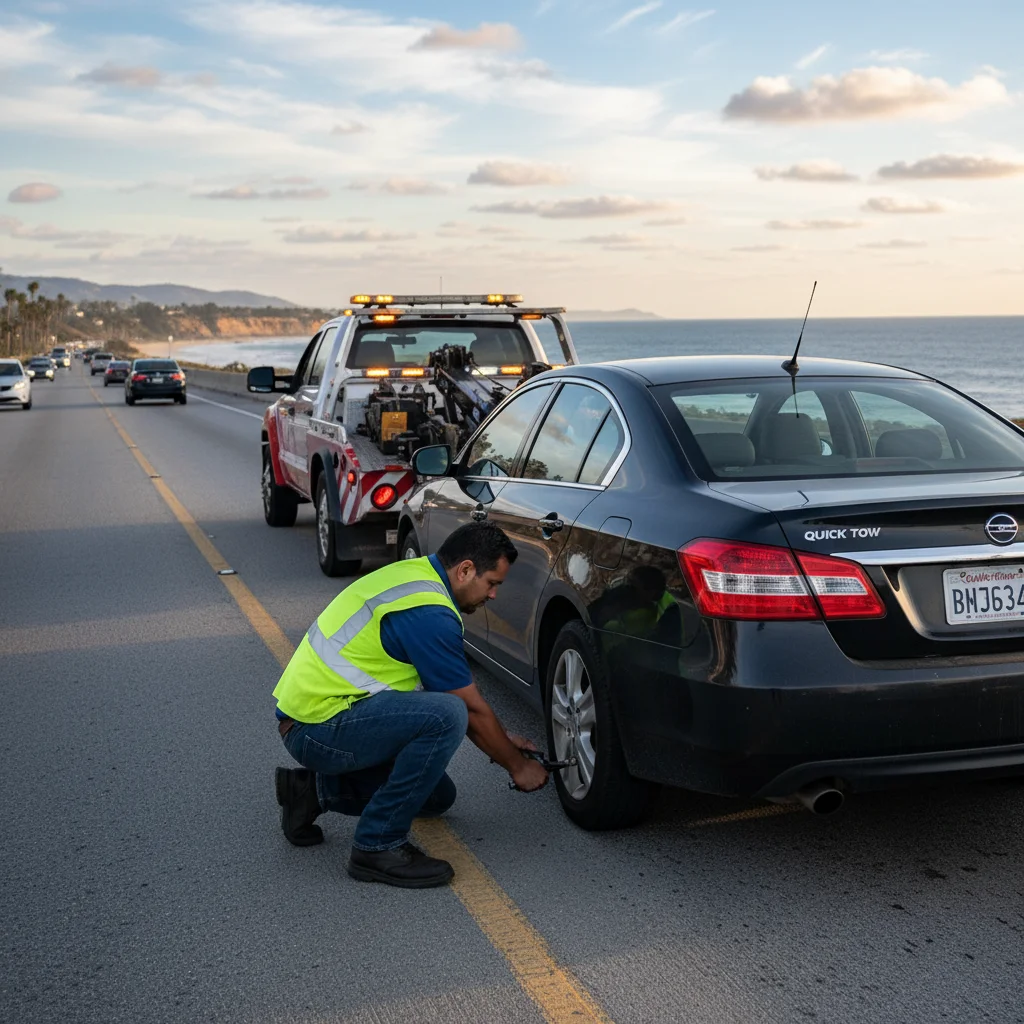
The two costs people keep mixing up
Most articles about flat tire cost are written by tire shops and insurance companies. They answer one question: how much does it cost to repair or replace the tire once you’re at the counter. That skips the part where you’re sitting on a freeway shoulder with a car you can’t drive.
The shop fix and the roadside rescue are two separate purchases. You might pay for both, or just one. Here’s the clean split.
The tire fix is what a shop charges to make the tire roadworthy again. A patch or plug is cheap. A new tire costs more and varies by size and brand. That’s the cost the competitor pages all cover.
The roadside service call is what it costs to get a technician to your location to swap your flat for your spare, or to tow you when there’s no usable spare. Quick Tow does the second part. We don’t sell you a tire. We get you off the shoulder and either back on the road or to the shop where you’ll buy one.
What the tire itself costs at a shop
Before we get into the roadside side, here’s the shop pricing so you can see the full picture. These ranges come from current tire-repair sources and are typical nationally, with San Diego shops trending toward the higher end of urban pricing.
| What you’re paying for | Typical price range | When it applies |
|---|---|---|
| Plug only (external) | $10 to $20 | Quick fix for a tread puncture, not the safest long-term repair |
| Patch-plug combo | $20 to $50 | Industry-standard tread repair done from inside the tire |
| Run-flat tire repair | $35 to $60 | Only if the tire is even eligible to be repaired |
| New tire (mounted) | $100 to $300 | Sidewall damage, blowout, or worn-out tire; varies by size and brand |
| Roadside spare swap | Flat service call, quoted before dispatch | You have a usable spare and just need it put on safely |
| Tow to a shop | Hook fee plus per-mile, quoted before dispatch | No spare, run-flat, shredded sidewall, or bent wheel |
Two things to notice. A patch is cheap. And a roadside service call is a completely different line item than any shop price, because you’re paying for someone to come to you, not for the tire.
The roadside service call: what Quick Tow actually does
When you call us with a flat, we’re not a tire store. We’re the help that gets you out of a dangerous spot. There are two versions of that call.
If you have a usable spare, we send a technician to swap it on the side of the road. They bring a heavy-duty hydraulic jack, an impact wrench for lug nuts that won’t budge, and cones and lights to build a safe work zone around your car. That’s a far better setup than the thin jack and wrench buried in your trunk, especially on a soft shoulder next to fast traffic. This is part of our roadside assistance service, and it’s the cheaper of the two options because nothing gets loaded onto a truck.
If you don’t have a usable spare, we tow you. More on when that happens below. The cost there is a hook fee plus mileage, the same structure as any tow, and you can sanity-check a rough number with our tow cost calculator before you call. Either way, we quote the price before we dispatch, so you’re never guessing.
Why San Diego freeways change the math
A flat tire in a parking lot is an annoyance. A flat on an I-5 merge is something else. Where you’re stranded changes both the danger and the right call.
San Diego’s freeway shoulders are narrow and fast. The I-5 through downtown, the I-15 climbing toward Escondido, and the I-805 split all have merge points where shoulders shrink and traffic stacks up at 70 miles an hour. Changing a tire yourself in that environment is genuinely risky. A professional setup with cones, lights, and a trained eye on traffic is worth far more than the small service fee.
The marine layer makes it worse. Morning fog leaves coastal stretches of the I-5 and the SR-94 slick and low-visibility, which is exactly when you don’t want to be crouched by your rear quarter panel. Construction corridors add debris. Stretches of the I-15 and the SR-52 see ongoing roadwork, and the screws, brackets, and metal shards that come with it are a leading cause of the punctures we get called for.
Then there’s the modern-car problem. A lot of San Diego drivers are in EVs and newer luxury cars that ship with no spare at all, just a sealant kit, to save weight. Teslas, many BMWs, and most EVs fall into this group. If the sealant doesn’t hold or the damage is too big, there’s nothing to swap to, and a tire change call becomes a tow. If that’s you, our EV towing San Diego guide covers why these cars need a flatbed.
When a roadside change is enough, and when you need a tow
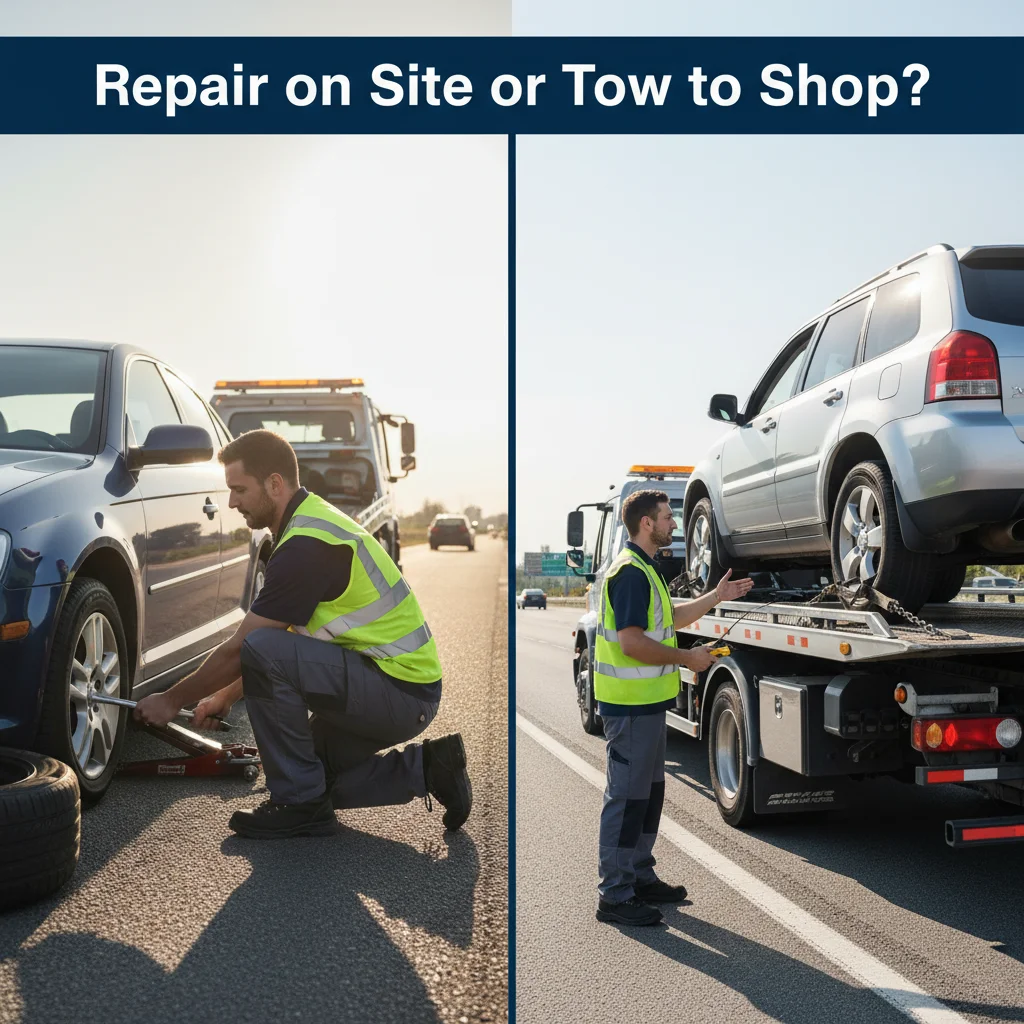
Here’s the decision in plain terms. A roadside spare swap solves your problem when three things are true: you have a spare, the spare is actually usable, and the wheel itself isn’t damaged. If all three hold, we put the spare on and you drive to a shop on your own schedule.
You need a tow instead when any of these show up:
- No spare. Many newer cars and most EVs carry a sealant kit instead. If the kit failed, there’s nothing to mount.
- The spare is dead too. A spare that’s sat in the trunk for years can be flat, dry-rotted, or unsafe. We check it before trusting it.
- A run-flat that’s done. Run-flats let you limp a short distance, but once they’re spent, you don’t keep driving on them.
- A shredded sidewall or blowout. Sidewall damage isn’t patchable and isn’t safe at speed. That tire is finished.
- A bent or cracked wheel. A hard pothole or curb hit can damage the wheel itself, and no tire will seat right on it.
When you call, tell our dispatcher whether you have a spare and what the damage looks like. That one detail decides whether we roll out a roadside tech or a tow truck, and it gets you the right help the first time. For the full breakdown of repair-on-site versus tow-to-shop, our flat tire towing San Diego guide goes deeper.
How this fits your total cost
Add it up and one of two things happens. With a usable spare, you pay the roadside service call now and a shop tire fix later, often just a $20 to $50 patch if the tire can be saved. With no usable spare, you pay for the tow now and a tire at the shop after, anywhere from $100 to $300 depending on the tire.
Either way, the roadside call is the part that gets you safe. The tire cost is the part that happens once you’re already off the freeway. People who only read shop-pricing pages plan for the second cost and get blindsided by the first. For a wider view of what roadside help runs across different situations, see our roadside assistance cost guide.
Frequently asked questions
How much does it cost to change a flat tire on the roadside in San Diego?
A roadside spare swap is a flat service call that we quote before we dispatch. It’s the cheaper of our flat-tire options because nothing gets loaded onto a truck. You’re paying for a technician, the right tools, and a safe work zone, not for a tire.
What if my car has no spare?
Then a roadside change isn’t possible and you need a tow. Many newer cars and most EVs ship with a sealant kit instead of a spare. If the kit didn’t hold, we tow you to a shop where you can buy and mount a tire. Tell our dispatcher up front so we send the right truck.
Can you tow me if the tire is destroyed?
Yes. A shredded sidewall, a blowout, a spent run-flat, or a bent wheel all mean the tire can’t go back on safely. In those cases we tow your car to the shop or mechanic you choose. The cost is a hook fee plus mileage, quoted before we head out.
Is a roadside tire change cheaper than a tow?
Usually, yes. A spare swap is a single flat service call with no mileage involved. A tow adds a hook fee and per-mile charges to get your car to a shop. That’s why a usable spare is worth keeping inflated. It can turn a tow into a quick swap.
How much will I pay total, roadside plus the tire?
With a usable spare, expect the roadside call now and a $20 to $50 patch later if the tire can be repaired. With no spare, expect the tow now and a $100 to $300 new tire after. We quote the roadside or tow price before dispatch so the first half is never a surprise.
Stranded with a flat in San Diego
If you’re on a shoulder right now with a flat, don’t fight the freeway. Call Quick Tow at (858) 923-5787, tell us whether you have a usable spare, and we’ll either swap it on-site or tow you to a shop. You’ll know the price before we roll out.