You’ve packed the boxes, signed the papers, and the moving truck is booked. The last piece of the puzzle is your car. Driving it hundreds of miles to a new state isn’t always practical, especially if you’re coordinating a family move or flying to your new home. This is where a professional long distance tow service comes in, turning a logistical headache into a simple, scheduled task.
What counts as long-distance in towing
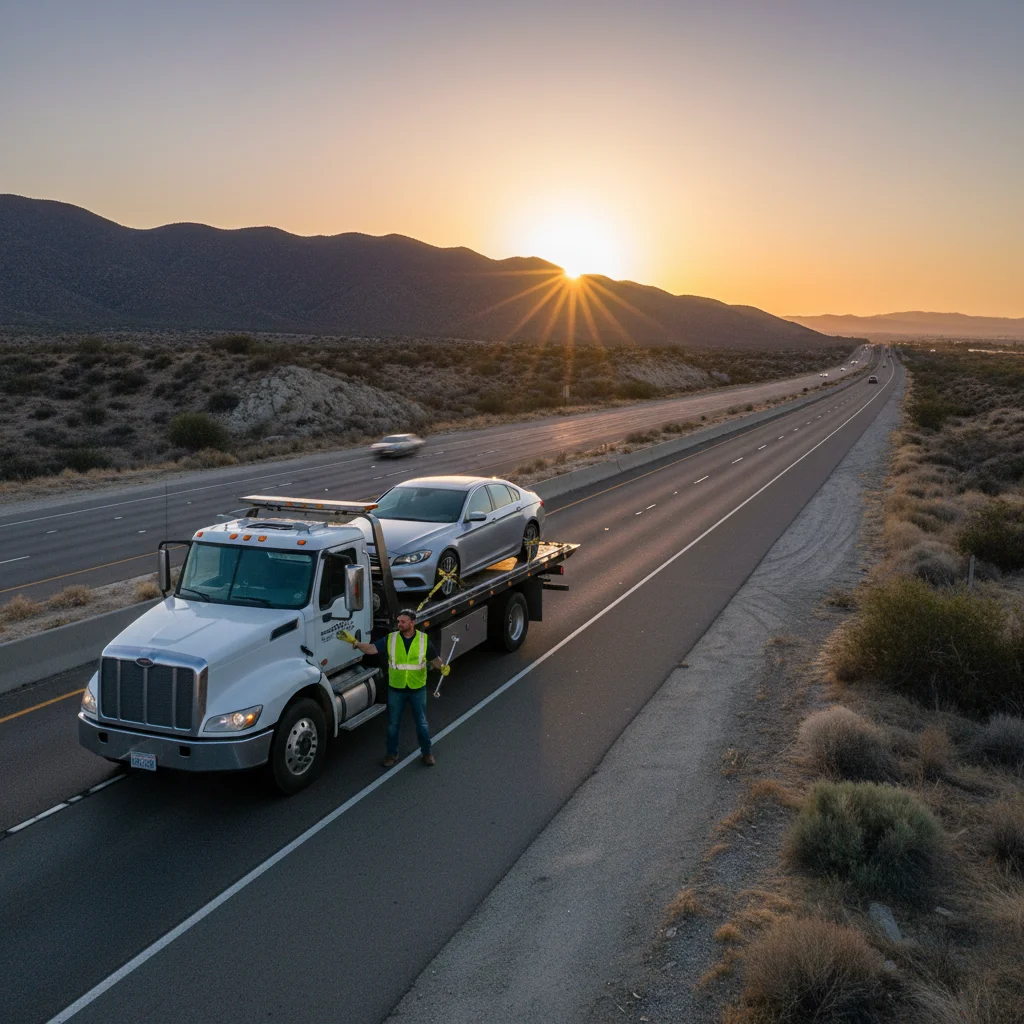
The term “long-distance towing” can mean different things. For us, it’s not just about the miles, it’s about the logistics. A standard tow might be getting your car from a breakdown on the I-5 in Carlsbad to your mechanic in Kearny Mesa. That’s a local job.
Long-distance towing is a different category of service. Generally, any tow over 50-100 miles is considered long-distance. More importantly, it almost always involves a planned, scheduled transport rather than an emergency call. These are moves from one city to another, often crossing county lines or even state borders.
Think of it as a dedicated delivery for your vehicle. Common reasons for needing long-distance towing from San Diego include:
- Relocation for a new job: Moving your family to a new city and need the second car transported.
- PCS moves: Military members at Camp Pendleton, MCAS Miramar, or Naval Base San Diego getting stationed elsewhere.
- “Snowbird” transport: Moving a car to a seasonal home in a place like Arizona or Nevada.
- College students: Sending a student off to a university out of state with their car.
- Buying or selling a vehicle: Purchasing a classic car from a seller in another state and needing it brought safely to San Diego.
Unlike a local emergency tow where the goal is just getting off the shoulder of the road, long-distance transport is about care, planning, and ensuring your vehicle arrives in the same condition it left. It requires different equipment, more detailed scheduling, and a clear understanding of interstate regulations.
Per-mile rates from San Diego to LA, Phoenix, Vegas
When you’re planning a move, the first question is always about cost. While we have a detailed post that breaks down long-distance tow cost factors, it’s helpful to understand how pricing works for popular routes out of San Diego. It’s not just a simple calculation of miles times a set rate.
Several key factors influence your final quote for a trip to Los Angeles, Phoenix, or Las Vegas:
- Base Hook-Up Fee: This is a flat fee that covers the labor and time for our operator to securely load your vehicle onto the truck. It’s the starting point for any tow.
- Per-Mile Rate: This is the core of the cost. The rate can vary based on the total distance. Sometimes, the per-mile cost decreases slightly for very long trips.
- Vehicle Size and Weight: A Ford F-250 costs more to transport than a Honda Civic. Larger, heavier vehicles require more fuel and may necessitate a heavier-duty truck, which affects the price.
- Route and Direction: A common route like San Diego to Los Angeles might have a more competitive rate than a trip to a remote town in rural Arizona. Fuel costs, tolls, and potential for return jobs all play a role.
- Time of Year: Demand is higher during peak moving season (summer) and for snowbirds in the fall and spring. Booking during these times can sometimes be more expensive.
- Urgency: A last-minute request may cost more than one scheduled weeks in advance, as it requires us to rearrange our logistics.
For a trip from San Diego to Phoenix, for example, the operator isn’t just driving there and back. They’re accounting for the hours on the road, fuel consumption for the specific truck and load, and wear on the equipment. This operational perspective is why getting a custom quote is essential. It allows us to give you an accurate price based on your specific vehicle and destination, with no surprises.
Flatbed transport vs tow dolly: which makes sense for your trip
When moving a vehicle over a long distance, how it’s transported matters. The two primary methods are flatbed transport and using a tow dolly. Each has its place, but for most long-haul trips originating in San Diego, one is a clear winner.
Flatbed transport
This is the gold standard for long-distance vehicle moving. A flatbed towing truck has a solid, level platform that your vehicle is driven or winched onto. All four wheels are secured on the bed, meaning your car isn’t rolling on the pavement at all during the trip.
Pros:
- Zero wear and tear: No miles are added to your odometer. Your tires, suspension, and transmission are completely at rest.
- Maximum safety: The vehicle is securely strapped down and protected from road debris and hazards. It’s the safest way to move a vehicle, period.
- Versatile: It’s the only safe option for all-wheel-drive (AWD) vehicles, many 4x4s, classic cars, luxury sports cars, and EVs like Teslas.
Cons:
- Higher cost: Using a dedicated flatbed truck is typically more expensive than a tow dolly due to the equipment involved.
Tow dolly
A tow dolly is a small, two-wheel trailer. The front two wheels of your car are driven onto the dolly and strapped down, while the rear two wheels remain on the ground. This method is common for DIY moves with a U-Haul but is rarely the best choice for professional long-distance transport.
Pros:
- Lower cost: It’s a cheaper method for very specific scenarios.
Cons:
- Wear and tear: Your car’s rear wheels are spinning for the entire trip, adding mileage and causing wear on the tires and wheel bearings.
- Drivetrain risk: It’s only suitable for front-wheel-drive vehicles. Using a dolly on a rear-wheel-drive or all-wheel-drive car can cause severe transmission damage.
- Less secure: The vehicle is more exposed to road hazards compared to being elevated on a flatbed.
For any trip of significant distance, especially an interstate move, flatbed transport is almost always the right answer. The peace of mind and protection it offers are well worth the difference in cost. It ensures your car arrives exactly as you left it.
Insurance, paperwork, and what to do with the keys
The logistics of an interstate tow go beyond just loading the car. Properly handling the details of insurance, paperwork, and vehicle access ensures a smooth and protected transaction. It’s a sign that you’re working with a professional and reputable company.
Insurance
Your personal auto insurance policy may or may not cover your vehicle while it’s being transported by a third party. It’s crucial to verify this with your agent. However, any professional towing company must carry its own liability and cargo insurance. This is what protects your vehicle against damage while it’s in their care, custody, and control.
Before you book, ask for a certificate of insurance. Don’t be shy about it. A legitimate company will provide it without hesitation. This document proves they have active coverage. You can always check a carrier’s state license status with the Contractors State License Board (CSLB) to verify they are in good standing.
Paperwork
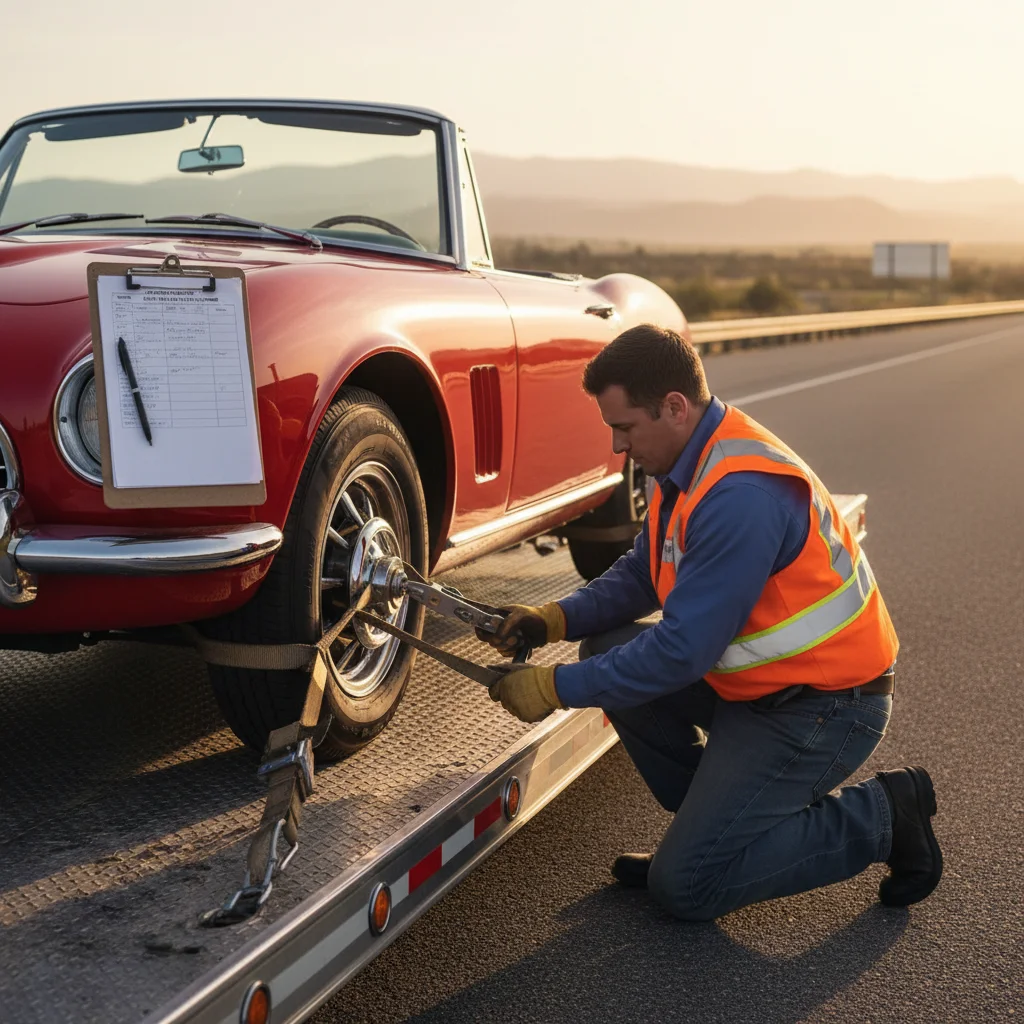
You should expect to sign a service agreement or bill of lading before your vehicle is loaded. This document outlines the terms of the transport, including:
- Pickup and delivery addresses.
- Contact information for both parties.
- An inspection report noting the vehicle’s condition (pre-existing scratches, dents, etc.).
- The total agreed-upon cost.
This paperwork protects both you and the towing company. Take a moment to review it and take photos of your car from all angles before it’s loaded. This creates a clear record of its condition at the start of the journey.
What to do with the keys
The driver will need one set of keys. This is necessary to steer the vehicle onto the flatbed and to move it if needed at the delivery point. You don’t need to hand over your entire key ring with house keys and fobs. Just provide the single car key or fob required for operation. Ensure the driver can lock and unlock the doors. It’s also wise to remove all personal belongings from the vehicle, as these are typically not covered by the carrier’s insurance.
Scheduling: how far ahead to book
Unlike an emergency roadside call, a long distance tow service is a scheduled, logistical event. Proper planning is key to securing the date you want at the best possible price. Spontaneity is not your friend here.
As a general rule, try to book your long-distance transport at least one to two weeks in advance. This gives the towing company adequate time to schedule a dedicated truck and driver for your specific route. This is especially important if your move is happening during a peak season. In San Diego, these include:
- Summer (May-August): This is the busiest season for household moves and PCS relocations for military families.
- Fall (September-October): “Snowbirds” often transport their cars from San Diego to warmer winter spots like Arizona.
- Spring (March-April): The reverse happens, with seasonal residents returning to Southern California.
Booking further out gives you more flexibility and can help you avoid surge pricing. If you need to move a car with less than a week’s notice, it may still be possible, but your options might be limited, and the cost could be higher due to the need for last-minute dispatching.
When you call for a quote, be ready with the year, make, and model of your vehicle, the exact pickup and delivery addresses (including zip codes), and your ideal pickup date. Being flexible by a day or two on your pickup or delivery window can sometimes open up more scheduling options and potentially lower your cost.
When a transport carrier beats a tow truck
At Quick Tow San Diego, we specialize in dedicated, point-to-point service. But it’s important to be honest about the different types of vehicle transport. For some situations, a large multi-car transport carrier is a better fit than a dedicated tow truck.
A dedicated tow truck, like one of our flatbeds, is perfect for what we call “regional” long-distance moves. This includes destinations like Las Vegas, Phoenix, the Bay Area, or anywhere within a 500-mile radius of San Diego. The benefits of using a dedicated truck for these routes are significant:
- Precise Scheduling: We can give you a specific pickup time and a very accurate delivery ETA, often within the same day or the next morning.
- Direct Service: Your vehicle is the only one on our truck. It goes directly from your location to its destination with no extra stops.
- Single Point of Contact: You work with one driver and one company throughout the entire process.
However, if you’re planning a cross country tow from San Diego to, say, Miami or New York, a multi-car transport carrier is usually the more practical and cost-effective choice. These are the large, double-decker trucks you see on the interstate carrying 8-10 cars at a time. They operate on a hub-and-spoke model, picking up and dropping off vehicles along a major route.
The trade-off for their lower per-mile cost on extreme distances is a lack of scheduling precision. They might give you a 3-5 day pickup window and a 7-14 day delivery window. For a true cross-country move where cost is the primary driver and timing is flexible, these carriers are the go-to solution.
For anything regional, where you need your car to arrive on a specific day and want the peace of mind of a dedicated transport, a service like ours is the ideal solution.
When to call us
If you’re planning a move out of San Diego County to anywhere in California, Arizona, or Nevada, you need a reliable partner. When you want a firm pickup time, direct transport, and the security of a dedicated flatbed for your vehicle, we’re the right call. We handle the logistics so you can focus on your move.
Call us at (858) 923-5787 for a same-day estimate.