Finding an unauthorized vehicle parked on your private property in San Diego can be incredibly frustrating. Whether it’s a car blocking access, parked in a reserved spot, or just left abandoned, you have rights as a property owner or manager. Knowing the correct, legal steps to get it removed is crucial to avoid complications.
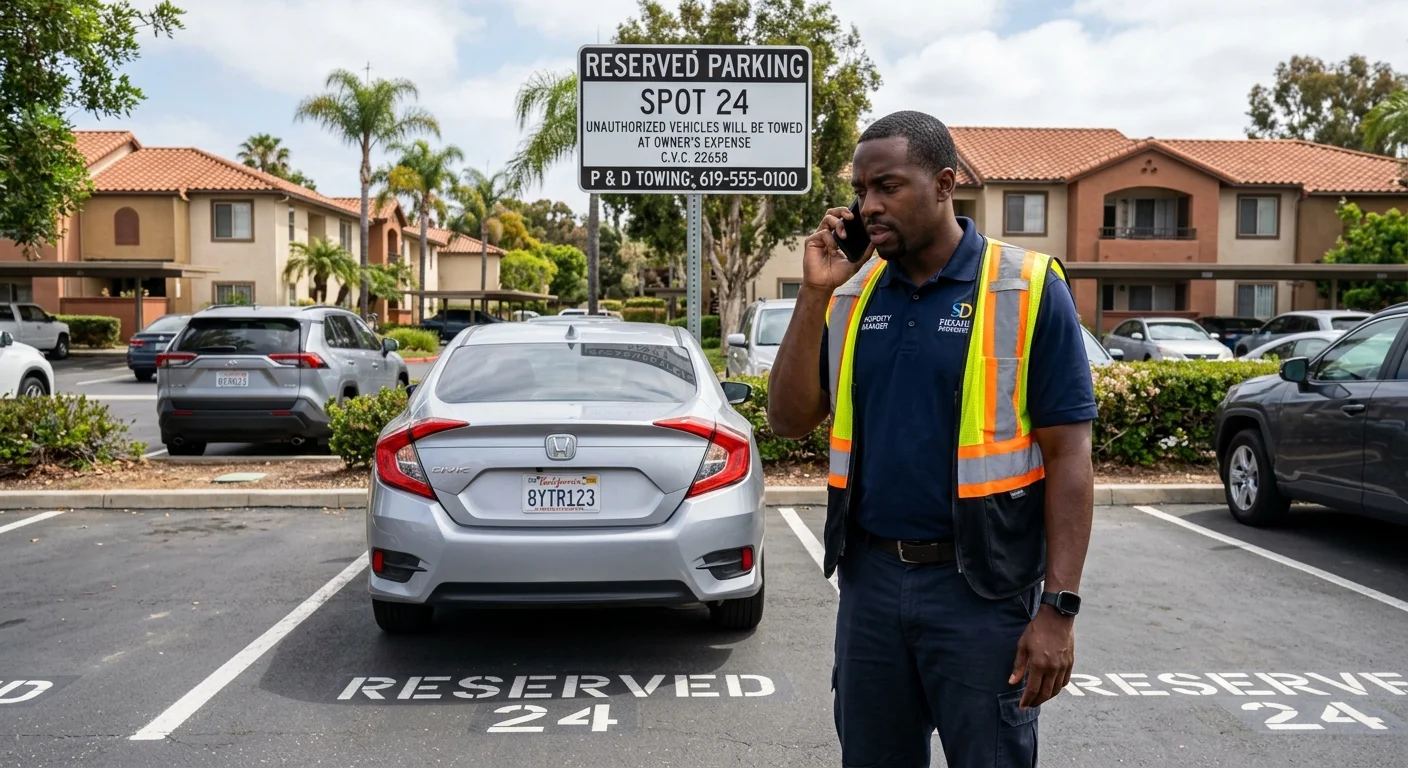
The first step: is the vehicle legally parked?
Before you consider having a vehicle towed from your private property, you need to confirm that it’s actually parked illegally. This might seem obvious, but California law, specifically California Vehicle Code 22658, sets clear guidelines for private property towing. Misinterpreting these rules can lead to serious legal issues for you as the property owner or manager.
In San Diego, common scenarios for illegal parking on private property include vehicles parked in fire lanes, blocking entrances or exits, occupying handicapped spaces without a valid placard, or parking in clearly marked reserved spots. For apartment complexes, HOAs, and businesses, this also covers unauthorized vehicles in tenant-only parking, employee-only areas, or customer parking that exceeds a posted time limit. Ensure your property has visible, compliant signage as required by state law. If your signs don’t meet California’s standards, you might not have the legal standing to tow. We cover this in detail in our article on private property towing sign requirements.
Take a moment to check for any visible permits, placards, or parking passes on the vehicle. Confirm that the vehicle isn’t a guest of an authorized resident or employee who might have permission under your property’s specific rules. Your property’s own parking policies are just as important as state law. A clear understanding of these rules helps you act confidently and legally when addressing parking violations. If there’s any doubt about whether the vehicle is truly illegally parked, it’s always best to err on the side of caution or seek clarification.
Documenting the violation: photos and notes are key
Thorough documentation is your best defense against potential disputes or legal challenges if you decide to have a vehicle towed. Before contacting a towing service, you should gather clear evidence of the parking violation. This isn’t just a suggestion; it’s a critical step that protects you and helps the towing company legally perform the service.
Start by taking multiple photos of the vehicle. These pictures should clearly show:
- The vehicle’s make, model, color, and license plate.
- The specific violation (e.g., parked in a red zone, blocking a driveway, occupying a reserved space).
- Any relevant signage indicating parking restrictions, such as “No Parking,” “Reserved,” or “Tow Away Zone” signs.
- The surrounding area to establish context and prove the location of the violation.
- The date and time the photos were taken. Most smartphone cameras automatically embed this information.
In addition to photos, make detailed notes. Jot down the exact date and time you first observed the violation, the vehicle’s license plate number, and its location on your property. If there were multiple observations over time (for abandoned vehicles, for instance), record each instance. These notes, combined with your photos, create a robust record that validates your request for a tow. This documentation proves invaluable, especially if the vehicle owner later disputes the tow or claims they were legally parked. It helps ensure that everyone involved – from you to the tow operator – is acting within legal boundaries.
Who to call: your rights as a property owner or manager
As a property owner or authorized agent in San Diego, you have the legal right to request the removal of unauthorized vehicles from your private property, provided you follow the correct procedures under CVC 22658. It’s important not to attempt to move the vehicle yourself or engage in any actions that could be construed as tampering. Your role is to identify the violation, document it, and then contact a licensed professional towing company.
When choosing who to call, always select a reputable and properly licensed towing service in San Diego, like Quick Tow San Diego. A professional company understands the nuances of private property towing laws and ensures all steps are taken legally.
Once you’ve made the decision to tow, you’ll need to contact a towing service that specializes in Private Property Towing. Explain the situation clearly, detailing the vehicle’s location and the nature of the violation. They’ll guide you through the next steps and ensure they have all the necessary information to proceed. Remember, acting quickly once a violation is confirmed, and after proper documentation, can help resolve the issue faster and prevent further inconvenience to your residents or business operations. Our dispatchers are well-versed in San Diego’s specific requirements and can efficiently assist you.
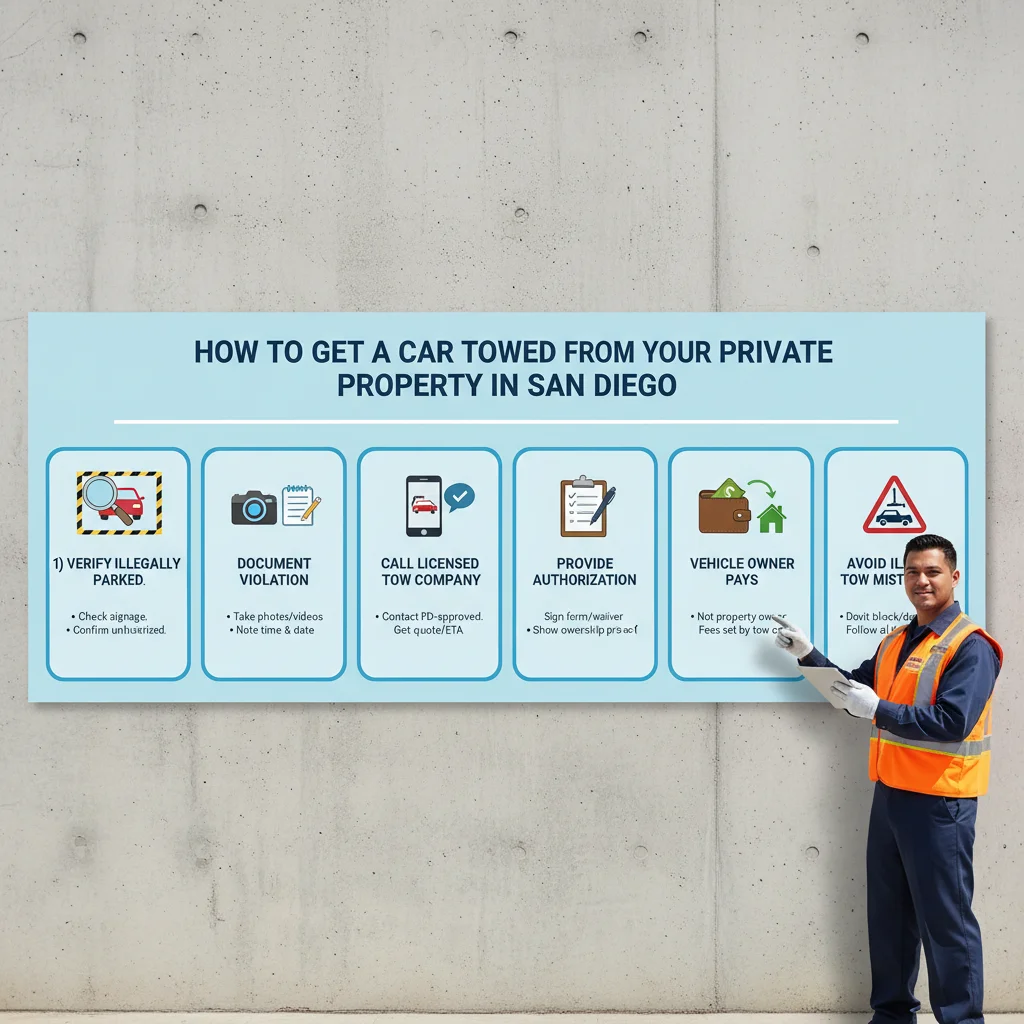
What our tow operator needs from you to proceed
When Quick Tow San Diego arrives to remove an unauthorized vehicle, our tow operator needs specific information and authorization. This ensures legal compliance and protects everyone involved. Having these items ready helps expedite the process.
Here’s what our tow operator will typically require:
- Proof of Authority: You’ll need to demonstrate that you are the legal owner, lessee, or authorized agent (like a property manager or HOA representative) of the private property. This could be a property deed, lease agreement, or a letter of authorization from the property owner.
- Signed Authorization to Tow: Our operator will present a tow authorization form for you to sign. This document legally grants Quick Tow San Diego permission to remove the vehicle. It’s a crucial piece of paperwork that confirms you’ve requested the tow.
- Documentation of the Violation: Provide the photos and notes you’ve collected showing the vehicle’s license plate, the specific parking violation, and relevant signage. This documentation confirms the legality of the tow and protects all parties involved.
- Vehicle Information: While our operator will verify details on site, having the vehicle’s make, model, color, and license plate number readily available can be helpful.
Our experienced operators are trained to guide you through this process. They’ll review all documentation to make sure everything is in order before hooking up the vehicle. We prioritize legal compliance to ensure a smooth and hassle-free experience for San Diego property owners and managers dealing with unauthorized parking.
Who pays for the tow (and why it’s usually not you)
One common question property owners ask about private property towing is, ‘Who pays?’ Under California Vehicle Code 22658, the vehicle owner is primarily responsible for towing and storage fees. This means you, as the property owner, typically won’t be charged directly. Quick Tow San Diego collects fees from the vehicle owner upon retrieval.
This arrangement is designed to protect property owners from incurring costs due to someone else’s parking violation. The law places the financial burden squarely on the party responsible for the vehicle’s illegal presence. This includes not just the initial tow fee, but also any daily storage fees that accrue while the vehicle remains at the impound facility.
However, there are rare exceptions where a property owner might inadvertently become responsible. If the tow is later deemed illegal due to improper signage, lack of proper documentation, or failure to follow the CVC 22658 guidelines, the property owner could be held liable for the towing and storage costs. This is precisely why it’s so vital to meticulously follow every step outlined in this guide – from verifying the violation to providing accurate documentation and working with a licensed, reputable towing service. By doing everything by the book, you ensure the costs are correctly assigned to the vehicle owner, as intended by law.
Common mistakes that can make a tow illegal
Even with good intentions, property owners can make mistakes that invalidate a private property tow, leading to legal and financial repercussions. Understanding these pitfalls is crucial for legally removing unauthorized vehicles from your San Diego property.
The most frequent errors include:
- Insufficient or Missing Signage: California law has strict private property towing sign requirements. Signs must be clearly visible, meet specific size and content criteria, and be posted at all entrances and at regular intervals. Without compliant signage, any tow initiated could be deemed illegal.
- Towing Too Soon: For non-hazardous violations (like general unauthorized parking), California law often requires a certain waiting period or notice before towing. For example, if a vehicle is parked in a residential common area, a 96-hour notice might be required unless specific conditions are met. Always check the exact requirements based on the nature of the violation and your property type.
- Lack of Proper Authorization: The person authorizing the tow must be the property owner or an authorized agent. If an unauthorized individual requests the tow, it could be challenged.
- Incomplete Documentation: As mentioned earlier, failing to properly photograph the violation, the vehicle, and relevant signage, or neglecting to make detailed notes, weakens the legal standing of the tow.
- Towing an Exempt Vehicle: Certain vehicles, like emergency vehicles or those performing legitimate services, might be temporarily exempt even if parked in a restricted area.
Always double-check that your property’s procedures align with CVC 22658 and local San Diego ordinances. Working with a professional and knowledgeable towing company like Quick Tow San Diego greatly reduces the risk of these mistakes, ensuring your private property towing actions remain fully compliant.
When to call us
Dealing with unauthorized vehicles on your private property can be stressful and disruptive. When you’ve confirmed a parking violation and gathered your documentation, don’t hesitate to reach out to a professional. Quick Tow San Diego provides reliable, legal Private Property Towing services throughout San Diego County. We’re here to help property owners and managers enforce their parking rules safely and efficiently. Call us at (858) 923-5787 for a same-day estimate.