As a property manager or HOA board member in San Diego, an unauthorized vehicle in a reserved spot or fire lane is more than an inconvenience; it’s a liability and a frustration for your residents. Removing that vehicle seems simple, but California law has strict rules you must follow to protect yourself and your tenants. This guide breaks down the process, focusing on the legal requirements you need to know.
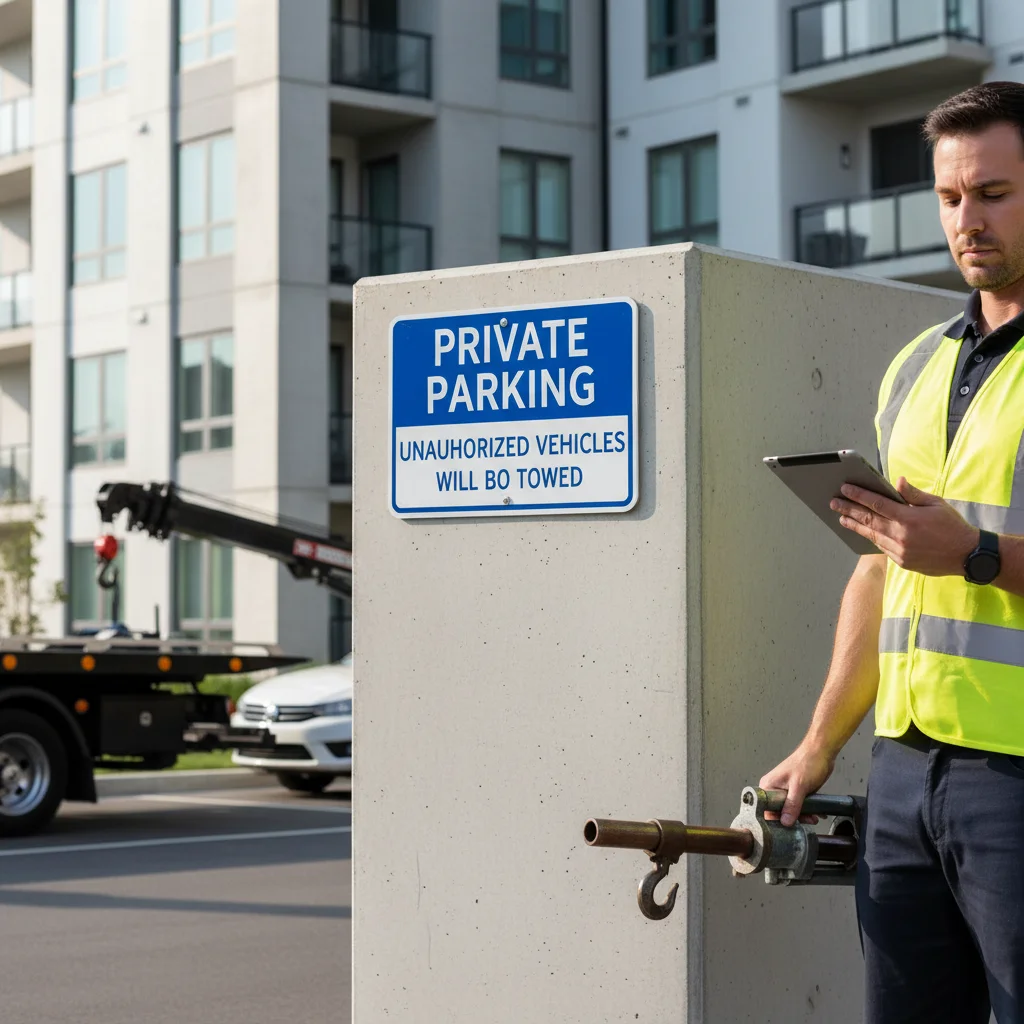
Understanding your rights as a property owner or manager
Your primary right as a property owner, or their designated agent, is to maintain safe and orderly access to your property. This includes ensuring fire lanes are clear, disabled parking is available for those who need it, and assigned parking spaces are respected. California Vehicle Code (CVC) 22658 is the cornerstone of private property towing law, and it grants you the authority to have vehicles removed, but only if you follow its procedures to the letter.
Think of CVC 22658 not as a hurdle, but as a framework for fair and legal enforcement. It’s designed to balance your rights with the vehicle owner’s rights, preventing wrongful tows and the legal headaches that follow. The law recognizes that you have a legitimate need to control your parking areas, whether it’s a residential apartment complex, a retail center, or a private driveway.
Your authority comes with responsibility. You must act in good faith and have a valid reason for the tow. You can’t tow a car for personal reasons or in a discriminatory way. The reason must be a clear violation of posted parking rules or state law, such as parking in a fire lane or blocking an entrance. By understanding and adhering to CVC 22658, you’re not just removing a car; you’re managing your property effectively and legally.
The CVC 22658 checklist: what’s legally required before you tow
Before you pick up the phone to call a tow truck, you need to ensure the situation meets the specific criteria laid out in California Vehicle Code 22658. An illegal tow can result in significant financial penalties for the property owner, so running through this mental checklist is crucial.
First, is the property correctly signed? In most cases, you cannot tow a vehicle unless there are signs posted at every entrance to the property. We’ll cover the specifics of these signs in the next section, but without them, you generally have no authority to tow.
There are a few key exceptions where you can tow a vehicle even without signs:
- Blocking Access: The vehicle is parked in a way that obstructs an entrance or exit.
- Fire Lane: The vehicle is parked in a designated fire lane.
- Disabled Space: The vehicle is parked in a space marked for disabled persons without a proper placard or plate.
- Within 15 Feet of a Fire Hydrant: This is a direct violation of state law.
- Towing from a Driveway: For a single-family dwelling, you can have a vehicle towed from your driveway without a sign, provided it’s completely on your property and blocking access.
If the vehicle has been parked on the property for over an hour and none of the above exceptions apply, the presence of proper signage becomes the deciding factor. The law is designed to give drivers fair warning. For a deeper dive into the nuances of the code, our detailed guide on CVC 22658 private property towing covers these conditions and exceptions extensively. The California DMV also provides resources for property owners navigating these regulations.
Proper signage: what the law requires for your parking lot
Proper signage is the most critical element for legal private property towing in California. If your signs don’t meet the strict requirements of CVC 22658, any tow you authorize could be deemed illegal. It’s not enough to simply have a sign; it must be the right sign, correctly placed.
Here’s what the law demands for your parking signs:
- Placement: A sign must be displayed in plain view at every entrance to the property. If your lot has three entrances, you need at least three signs.
- Size: The sign itself must be at least 17 inches by 22 inches, with lettering that is a minimum of one inch in height. This ensures it’s easily readable from a distance.
- Required Information: Each sign must state that the property is private and that unauthorized vehicles will be towed at the owner’s expense. Crucially, it must also include the name and telephone number of the towing company you have contracted with.
- Clarity: The sign must clearly indicate who is authorized to park there (e.g., “Parking for residents of 123 Main St. only”).
Many property managers are surprised by the level of detail required. A simple “No Parking” sign from a hardware store is not legally sufficient for towing. You must include the specific tow company’s information so a vehicle owner knows who to call to retrieve their car. This transparency is a key part of the law.
For a complete breakdown of fonts, colors, and placement strategies, you can review our dedicated post on private property towing sign requirements in California. Getting your signage right from the start is the best way to prevent legal challenges and ensure your parking enforcement is both effective and compliant.
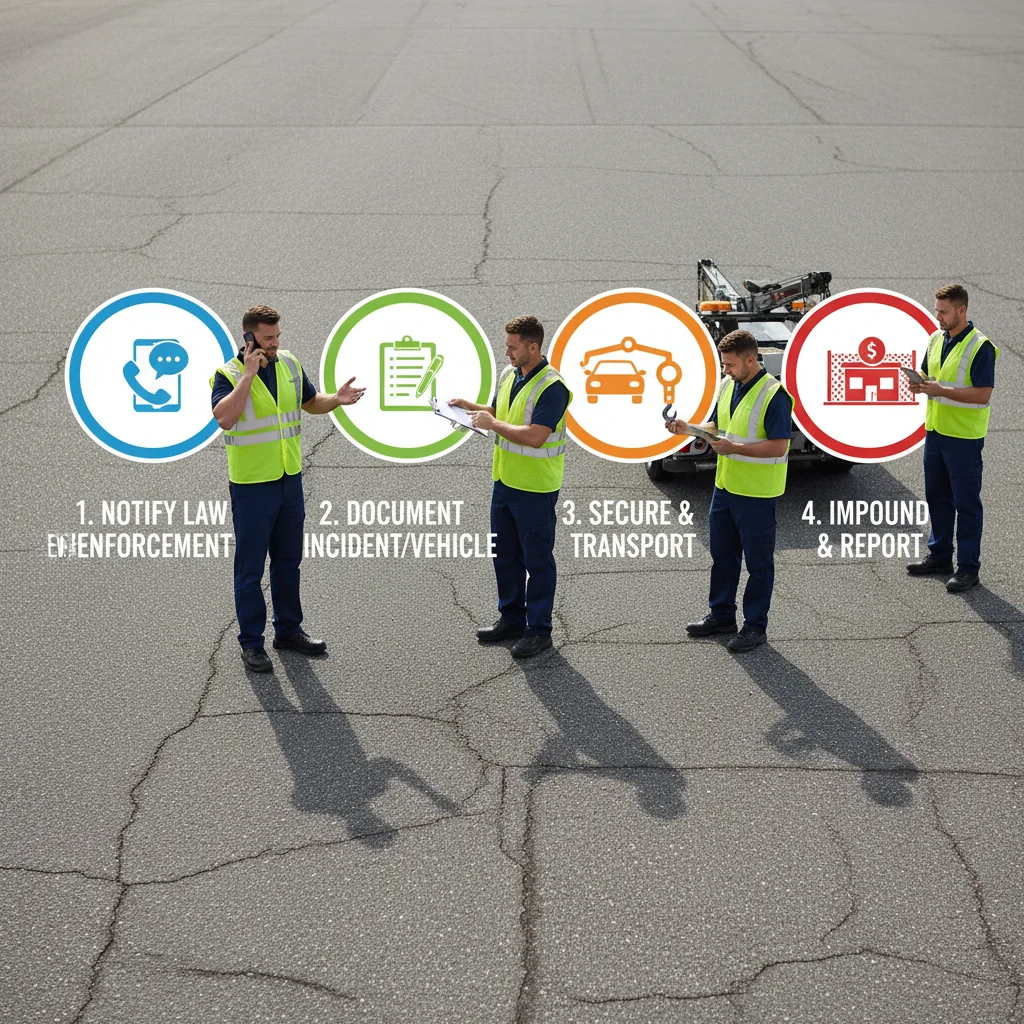
The 4 steps to initiate a legal tow in San Diego
Once you’ve confirmed a vehicle is in violation and your property is compliant with CVC 22658, the process of initiating the tow is straightforward. Following these four steps ensures the removal is handled legally and efficiently.
1. Verify the violation
Before making the call, double-check everything. Is the car actually in a reserved spot? Check your tenant roster. Is the vehicle’s permit expired or is it missing entirely? Take a photo of the vehicle showing the violation (e.g., parked in a fire lane, no permit visible). This documentation is your proof if the tow is ever challenged.
2. Provide written authorization
CVC 22658(l) requires that you, as the property owner or your authorized agent (like a security guard or apartment manager), provide a written authorization to the towing company before the tow. This authorization must include:
- The make, model, VIN, and license plate number of the vehicle.
- The name, signature, job title, and phone number of the person authorizing the tow.
- The reason for the tow.
- The date and time of the authorization.
A reputable towing company will require this from you. It protects both you and the tow operator by creating a clear paper trail.
3. Contact a licensed and insured towing company
You must use a professional towing service that is licensed and understands the specifics of private property impounds. When you call, provide the vehicle information and the nature of the violation. A professional team, like Quick Tow San Diego, specializes in private property towing services and can ensure the process is handled correctly and safely, without damaging the vehicle or your property.
4. Notify local law enforcement
Within one hour of the tow, either you or the towing company must notify the local law enforcement agency (e.g., San Diego Police Department or Sheriff’s Department) of the tow. This is a critical step. The notification includes the vehicle’s description, the location it was towed from, and the location where it is being stored. This allows the vehicle owner to quickly find their car by contacting the police, preventing them from mistakenly reporting it as stolen.
Who pays for the tow? Explaining owner responsibility
This is one of the most common questions from property managers: “Do I have to pay for this?” The answer, in a legal and compliant tow, is no.
Under California law, the registered owner of the vehicle is responsible for all costs associated with the towing and storage of their vehicle. When you authorize a tow from your property, you are not incurring a bill. Instead, you are initiating a legal process where the towing company takes temporary possession of the vehicle to resolve a parking violation.
The towing company places a possessory lien on the vehicle for the cost of their services. The vehicle owner must pay the accrued towing and storage fees directly to the tow company to get their car back. If they fail to claim their vehicle, the company can eventually sell it through a lien sale process to recover their costs. This is a standard procedure governed by the California Vehicle Code.
Your only responsibility is to follow the law (CVC 22658) in authorizing the tow. As long as you have the proper signage, a clear violation, and provide written authorization, the financial obligation falls entirely on the vehicle owner. This system allows you to enforce your parking rules without having to bear the cost of removal.
When to call us
When you’re facing an illegally parked vehicle and have confirmed the violation, it’s time to call a professional. Quick Tow San Diego is an expert in San Diego’s private property towing laws and works with property managers and HOAs across the county to resolve parking issues quickly and legally. We ensure all paperwork is correct and every step complies with CVC 22658, protecting you from liability.
Call us at (858) 923-5787 for a same-day estimate.