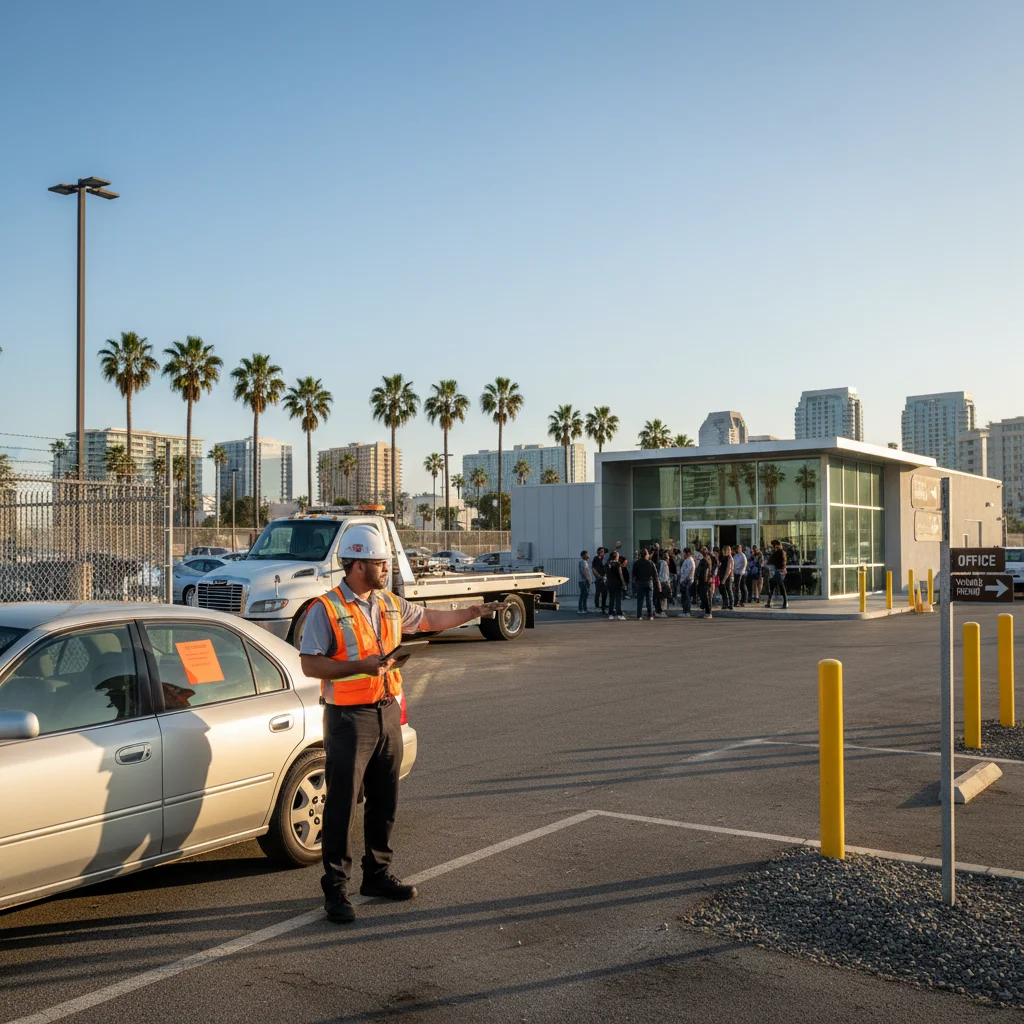
To get your car out of impound in San Diego, first find out who towed it by calling the San Diego Police non-emergency line, the CHP, or the private tow company listed on the posted parking sign. Then go to that tow yard with three things: a valid photo ID, your current vehicle registration, and proof of insurance. The registered owner usually has to be present, or send someone with a notarized authorization letter. Pay the tow fee plus daily storage before release, so act fast because storage adds up every day. If police placed a hold, like a DUI or a 30-day suspended-license hold, you may also need a release form or hearing before the yard can hand the car back.
Quick Tow SD is a towing company, not a government impound lot. We can’t release a held vehicle for you. But once the yard releases it, we can tow it to your home or a repair shop anywhere in San Diego County. Call us at (858) 923-5787 when your car is ready to move.
Step-by-step: getting your car back
- Find out who towed it. Call the San Diego Police non-emergency line for tows inside the city, the CHP for freeways and unincorporated areas, or the private tow company named on the parking sign. Give them your plate number and the spot where you parked.
- Get the tow yard’s name, address, and phone. Write it down. Ask their release hours, since most yards release vehicles only during set hours.
- Confirm what you need to bring. Ask the yard for the exact documents and the total fees, including any police hold that has to clear first.
- Gather your documents. Valid photo ID, current registration, and proof of insurance at minimum. Bring a notarized authorization letter if you’re picking up for someone else.
- Clear any police hold. For DUI, suspended-license, or evidence holds, get the release form or attend the hearing the agency requires before the yard can release the car.
- Pay the full balance. Tow fee plus every day of storage, due in full before release. Confirm whether they take cash, card, or both.
- Inspect and leave. Check the car for new damage and photograph anything you find. Then drive it out if it’s safe and you’re licensed, or arrange a tow.
How to find where your car was towed
San Diego County spans dozens of cities and many separate tow yards, so the first job is figuring out which agency or company moved your car. Start by checking the spot for a red curb, a no-parking sign, or a private-property tow warning sign, which names the towing company and a phone number.
If there’s no private sign, call the law enforcement agency for that area on its non-emergency line:
- San Diego Police Department for tows inside the city of San Diego.
- California Highway Patrol for freeways like I-5, I-15, I-8, and SR-163, plus unincorporated areas. The CHP website lists contact info.
- Sheriff’s Department for areas like Santee, Poway, Imperial Beach, and Alpine.
- City police departments for Chula Vista, Oceanside, Escondido, Carlsbad, and other incorporated cities.
Give them your plate number, make, model, and the exact location. They can tell you if a tow was logged and which company holds the vehicle. If a private property owner had it towed under CVC 22658 private property towing rules, the sign at the lot is your fastest path to the yard.
What documents you need
You won’t get the car back without proving it’s yours and that you’re cleared to take it. These are the documents San Diego yards typically require.
| Document | Who needs it | Notes |
|---|---|---|
| Valid government photo ID | The person picking up the car | Driver’s license, state ID, or passport. Must be current. |
| Current vehicle registration | The vehicle | The title in your name works if registration is missing or expired. |
| Proof of insurance | The registered owner | Current insurance card or policy declaration page showing the vehicle. |
| Valid driver’s license | The person driving it out | If your license is suspended, bring a licensed driver to take the wheel. |
| Police release form | Held vehicles | Required when police placed a DUI, evidence, or 30-day hold. |
| Notarized authorization letter | Third-party pickups | Needed if you’re not the registered owner, plus a copy of the owner’s ID. |
The registered owner usually has to be present in person. If that’s not possible, the owner can authorize someone else with a notarized letter and a copy of their ID. When you’re unsure which forms apply to your situation, call the impounding agency before you drive over, because a wasted trip costs you another day of storage.
How fees and storage work
Getting a car out of impound isn’t free, and the meter runs every day it sits. You’ll generally face three kinds of charges, plus possible add-ons.
| Charge | What it covers | How it works |
|---|---|---|
| Tow fee | The hook and haul to the yard | A one-time charge set when the vehicle is towed. |
| Daily storage | Each day the car sits | Accrues per day, often counting partial days, weekends, and holidays. |
| Release or admin fee | Processing paperwork | Some yards or agencies add a flat administrative charge. |
Exact dollar amounts vary by yard, vehicle size, and how the tow was ordered, so ask the impounding agency or yard for the full breakdown before you go. The one constant is that storage is the part that grows. A car you reclaim on day two costs far less than the same car on day ten. Most yards take cash and major cards, and you pay the full balance before they release the vehicle. Don’t assume you can grab belongings from inside first, because most yards won’t open the car until fees are paid and the release is signed.
Special cases: 30-day holds, DUI, and suspended license
Some impounds come with extra rules that a routine parking tow doesn’t:
- DUI arrests. If a driver is arrested for DUI, the vehicle is almost always impounded, and a police hold has to clear before release.
- Suspended or unlicensed driver, CVC 14602.6. California law allows a 30-day impound when someone drives on a suspended license or with no license. Getting the car back early can require a hearing with the impounding agency. Ask them about the storage hearing and what proof they’ll need.
- Evidence or investigation holds. Cars tied to a criminal case may be held longer, with release controlled by the police agency rather than the yard.
In every one of these cases, the tow yard can’t release the car on its own. You have to clear the agency’s hold first, then pay the tow and storage. Call the agency that placed the hold and ask exactly what form or hearing stands between you and your car.
What to do if you can’t afford it, and lien-sale risk
If the bill is more than you can pay, the worst move is to do nothing. Storage keeps climbing, and after a vehicle sits long enough, the yard can start a lien-sale process to sell it and recover costs. California timelines depend on the vehicle’s value, but the process can begin in a matter of weeks, not months.
A lien sale can cost you the car and still leave you owing any shortfall after it sells. So if money is tight, act early. Ask the yard whether they offer any payment arrangement, borrow short-term if you can, and prioritize getting the car out before storage doubles the bill. Call the impounding agency and the yard the same day you learn where the car is, because every day you wait makes the math worse.
Frequently asked questions
How do I find out where my car was impounded in San Diego?
Call the San Diego Police non-emergency line if it was towed inside the city, the CHP for freeways or unincorporated areas, or the private tow company named on the parking sign. Give them your plate number and the exact spot you parked. They can confirm the tow and tell you which yard holds the vehicle.
What do I need to get my car out of impound?
Bring a valid government photo ID, your current vehicle registration, and proof of insurance. The registered owner usually has to be present, or send someone with a notarized authorization letter and a copy of the owner’s ID. If police placed a hold, you’ll also need a release form before the yard hands the car over.
How much does impound cost per day in San Diego?
You’ll pay a one-time tow fee plus a daily storage charge for every day the car sits, and some yards add an administrative fee. Exact rates vary by yard and vehicle size, so ask the impounding agency or yard for the full breakdown. Storage is the part that grows fast, so retrieving the car early saves the most money.
Can someone else pick up my impounded car?
Yes, but they need the right paperwork. They’ll need their own valid photo ID and driver’s license, the vehicle’s current registration, and a notarized letter of authorization from the registered owner plus a copy of the owner’s ID. Without those, the yard will deny release.
Can I get my belongings out without paying the fees?
Usually no. Most San Diego yards won’t open an impounded vehicle for personal items until the tow and storage fees are paid and the release is signed. Plan to settle the balance first, then collect your belongings when you take the car.
What happens if I don’t pay or can’t afford it?
Daily storage keeps accruing, and after the car sits long enough the yard can start a lien sale to sell it and recover costs. That can mean losing the car and still owing any shortfall afterward. If money is tight, call the yard early about payment options instead of letting the balance grow.
Need a tow once your car is released?
Quick Tow SD doesn’t run the impound lots, but we get San Diego drivers home after release. If your car was towed after an accident, isn’t safe to drive, or needs a flatbed because it’s an AWD or EV that has to ride on a bed, we can pick it up from the yard and take it to your home or shop. We also handle private property tows for authorized owners and removals tied to abandoned vehicles.
We run 24/7 with live dispatch and flat-rate pricing, no surge for nights, weekends, or holidays, across all of San Diego County. When your vehicle’s released and ready to move, call us at (858) 923-5787.